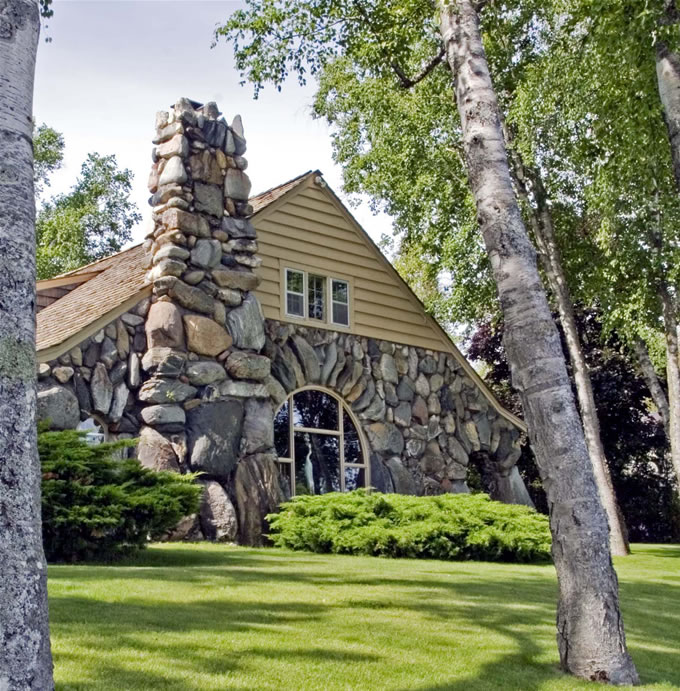
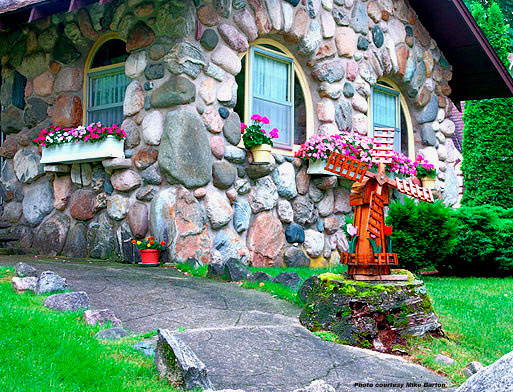
Boulder Manor is one of the most astonishing homes in northern Michigan. (Photo courtesy of Mike Barton
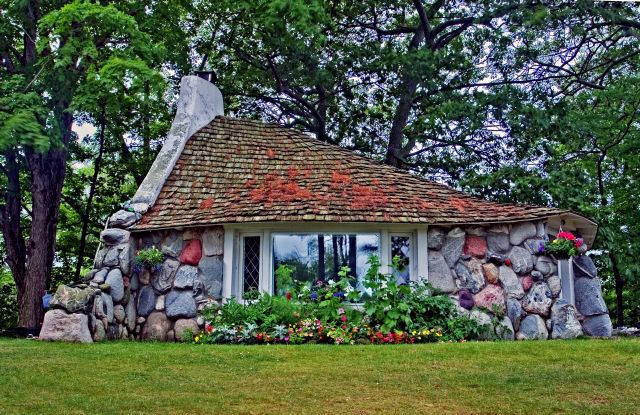
The “Half House" is the smallest of Earl Young's houses and is considered by many to be the quintessence of his style. (Photo courtesy of Mike Barton)
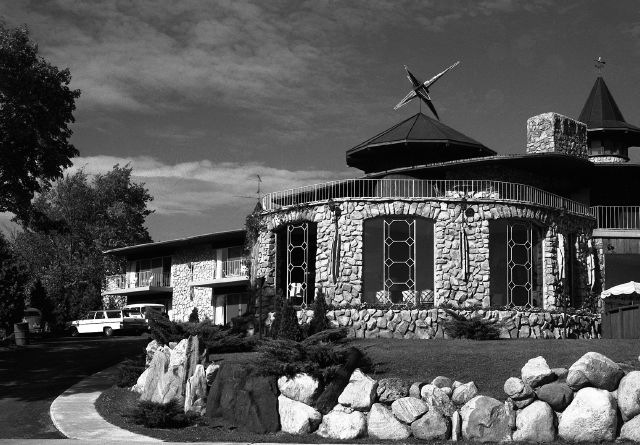
Situated along the shore of Lake Michigan, this home was built in the late 1940s for William Sucher, head of the Speedway 79 Gasoline Company.
The official “Mushroom House” at the corner of Grant Street and Clinton Street is considered to be Earl Young’s residential masterpiece. (Photo courtesy of Mike Barton)
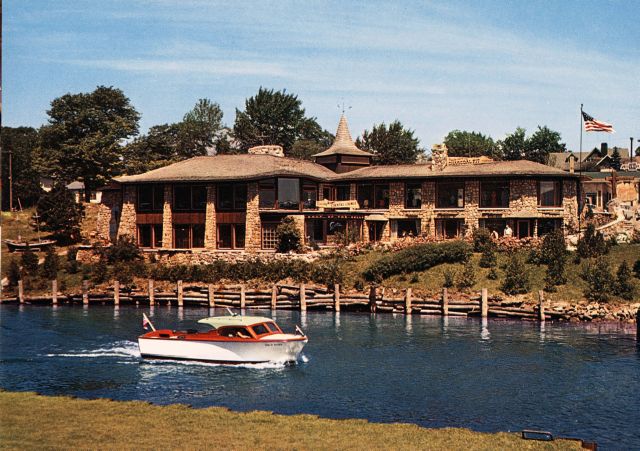
Earl Young’s masterwork is the Weathervane Inn restaurant begun on the site of the Argo Milling Company in August, 1953.
The Weathervane Terrace built between 1961 to 1964, was one of two motels built by Young.
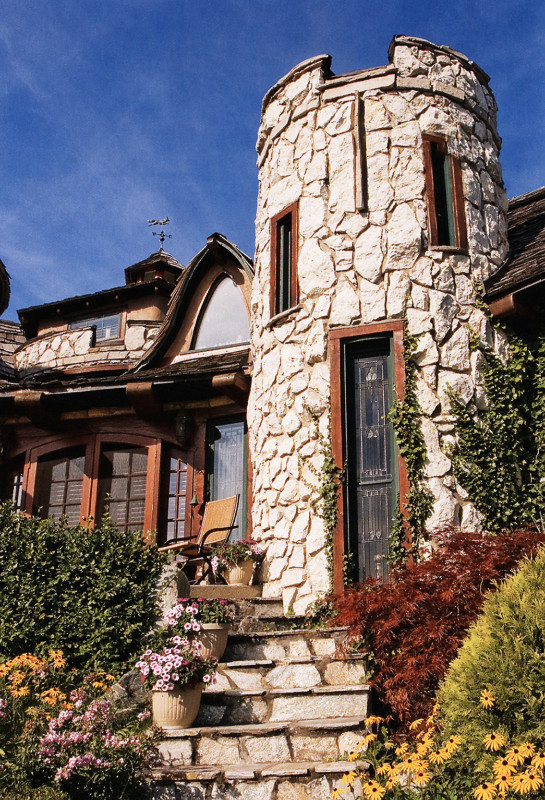
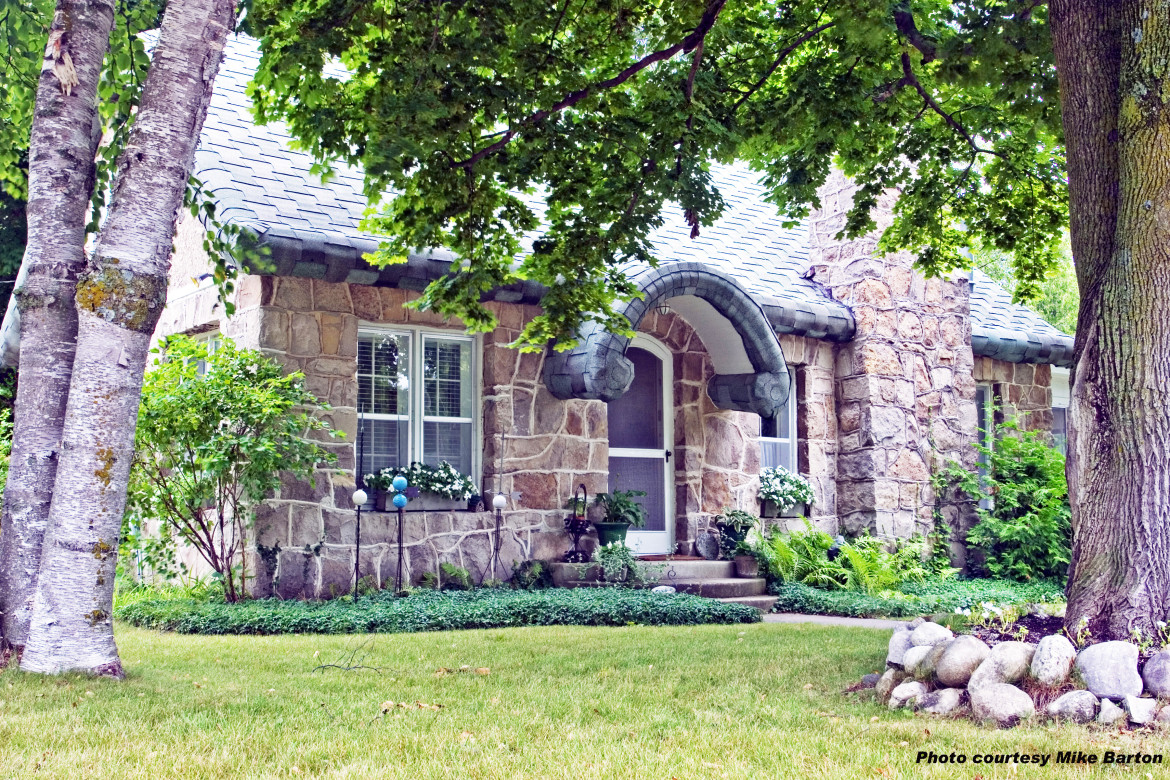
The facade of the "Castle House" on 3 Thistle Down. Due to extensive renovations, the stone turret and the undulated ceder roof are all that is left of the original design (Photo courtesy of Mike Barton).
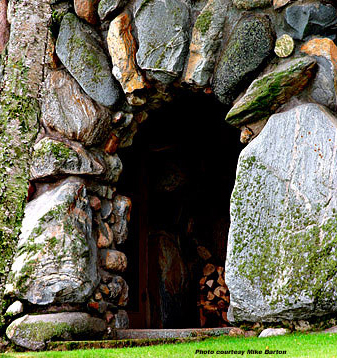
The tiny porch of Boulder Manor is supported by a massive five-foot granite boulder (Photo courtesy of Mike Barton).
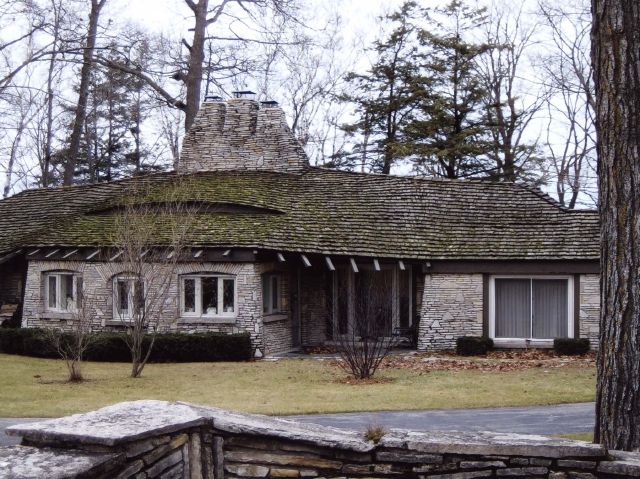
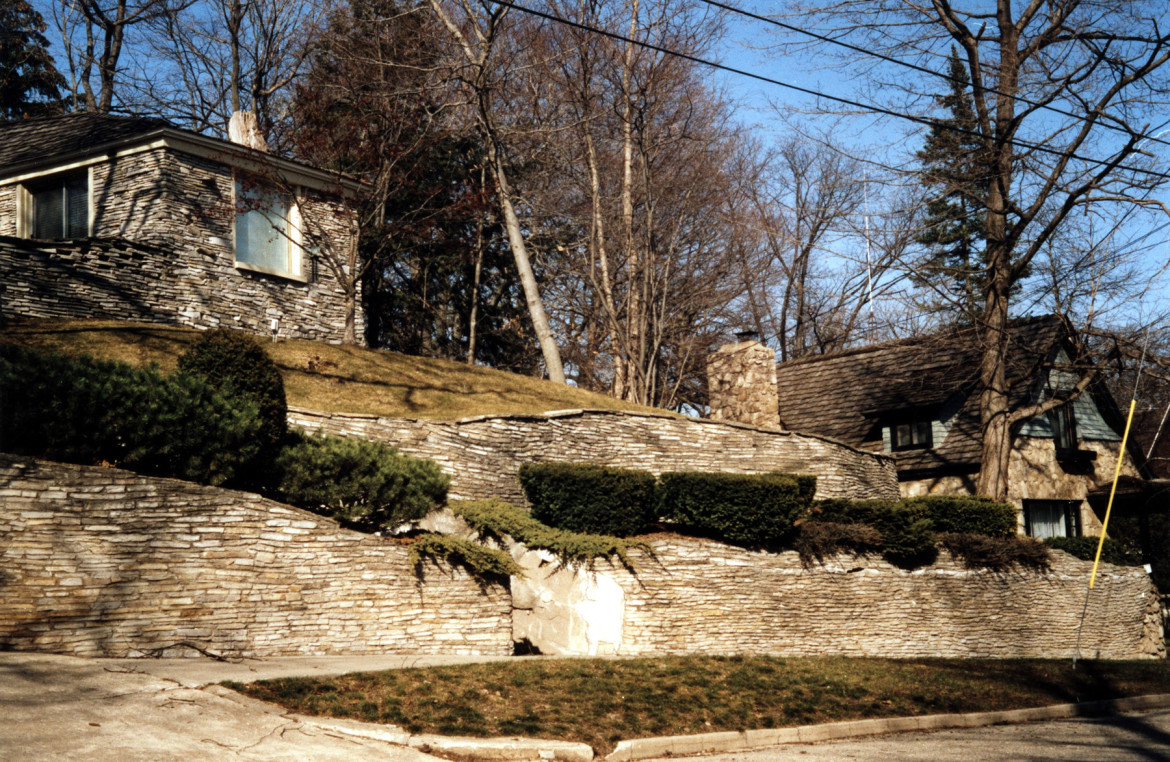
South elevation (rear) of 306 Park Avenue. The wall is constructed of Onaway limestone, laid in the same manner as the house.
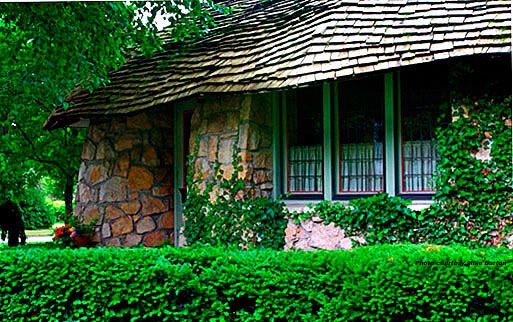
The "White Mortar House" in Boulder Park. (Photo courtesy of Mike Barton).
Facade of the "Owl House" located in Boulder Park. (Photo courtesy of Mike Barton)
103 Grant St. The "Mushroom House." (Photo courtesy Mike Barton)
Walking Tours
As of June 9, 2026, the Charlevoix Historical Society will no longer offer walking tours of Charlevoix’s Earl Young houses. Thank you to all who joined us over the years, and for the generous support that has helped benefit the Museum at Harsha House.
Earl Young
Charlevoix’s “Master Builder in Stone” Earl Young was born March 31, 1889, in Mancelona, Michigan and moved to Charlevoix with his family at age 11. An insurance and real estate agent by trade, this self-taught builder began his craft in 1919. His first project was his personal home located on Park Avenue. He would continue to build for the next fifty years, completing 26 residential and 4 commercial properties, most of which remain today.
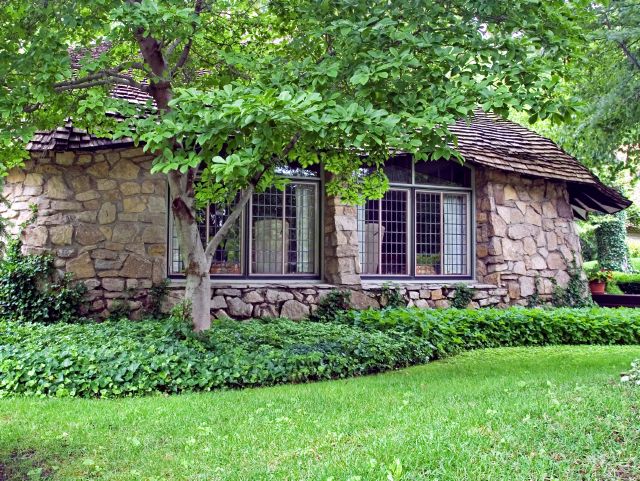
Each of Young’s houses are unique and were designed to blend in with its surrounding landscape. They are constructed of indigenous materials, hand-selected by Young, like boulders found along the shores of Lake Michigan and Lake Superior, or in farm fields. Each house was built to compliment it’s natural surroundings. Young’s style often consists of houses with unique placement of stone, wide, wavy eaves; exposed rafter tails; cedar-shake roofs; and a horizontal emphasis in design