These photographs are a small sample of the over 10,000 photos we have available for purchase. For available sizes, pricing and specific topics (i.e. lighthouse, Bridge St. businesses) please contact us at 231-547-0373 or info@chxhistory.com.
The following images are the sole property of the Charlevoix Historical Society except where noted.
Reproduction for any purpose is strictly prohibited without written permission.
Charlevoix has been long known for its unique houses. A short distance from the channel bridge, this was 103 Main Street (Park Avenue), built by pioneer settler Amos Fox as his second home around 1879. The house was the permanent residence of the lighthouse keeper from 1908 to 1941, conveniently located near both piers. Today the property is serene Hoffmann Park overlooking the channel where the key that once turned the swing bridges is displayed.
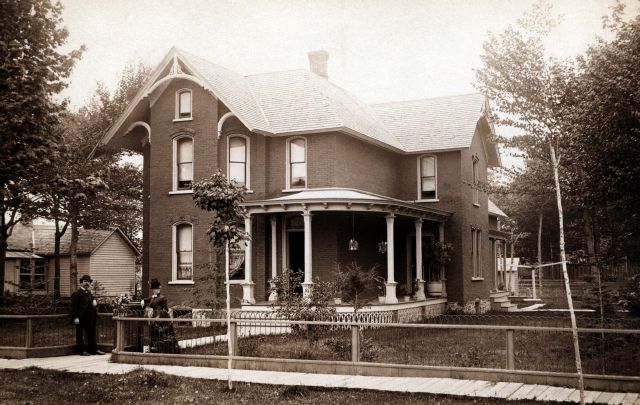
The Horace S. Harsha House at 103 State Street, home of the Charlevoix Historical Society since 1979. Mr. Harsha built this Queen Anne-style house beginning in 1891, and the family moved in in 1892. The Historical Society needed a home after it was reorganized in 1972. Horace’s granddaughter Anne Harsha sold the house to the Society for $1 in 1978 with the stipulation it always retain its name in honor of her family. The Society moved in a year later. Three restored Victorian parlors occupy the first floor. The Harsha House Museum wraps around them on the north and west side
Next door to the Harshas stood the classy brick Bartholomew house, built by the owner of the hardware store a block away on the Park Avenue/Bridge Street corner. It is now the site of the Charlevoix State Bank.
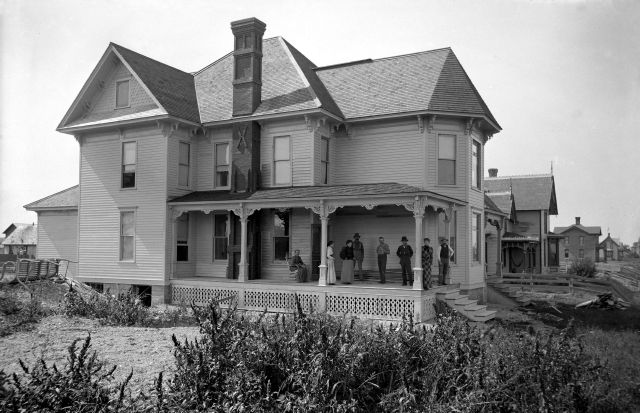
The residence of Will Hampton, editor of the Charlevoix Courier and bitter rival of the Sentinel’s Willard Smith. It was located at 307 Michigan Avenue, now the site of the Dunes Condominiums. Will, a crack bicycle racer and organizer of racing contests, appears on the bike with an infant son. A passionate lover of literature, he named one of his boys Victor Hugo Hampton. The Hamptons lived next door to the summer home of the Teasdale family of St. Louis, whose daughter Sara became one of America’s most prominent poets.
206 Belvedere Avenue on the south terrace overlooking Round Lake. A summer home, it recently celebrated 100 years of ownership in the same family. The east and west elevations are staggered on both levels to allow a view of the lake from practically every room in the house.
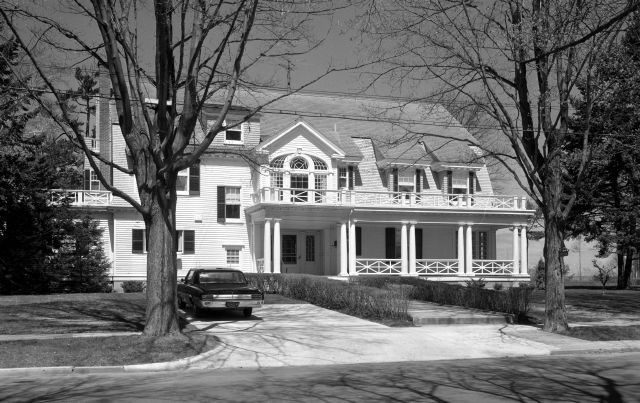
This stately home at 429 Michigan Avenue was built between 1911 and 1913 by David May, founder of the May Company department store chain in the Midwest. Remodeled in the 1990s, it has 29 rooms plus 11 bathrooms that cover 15,000 square feet.
David May’s brother-in-law Col. Moses Schoenberg erected this Roman Revival mansion next door at 431 Michigan Avenue. It was purchased in 1942 by Leigh Block, owner of Inland Steel of Chicago, the sixth largest steel company in the United States.
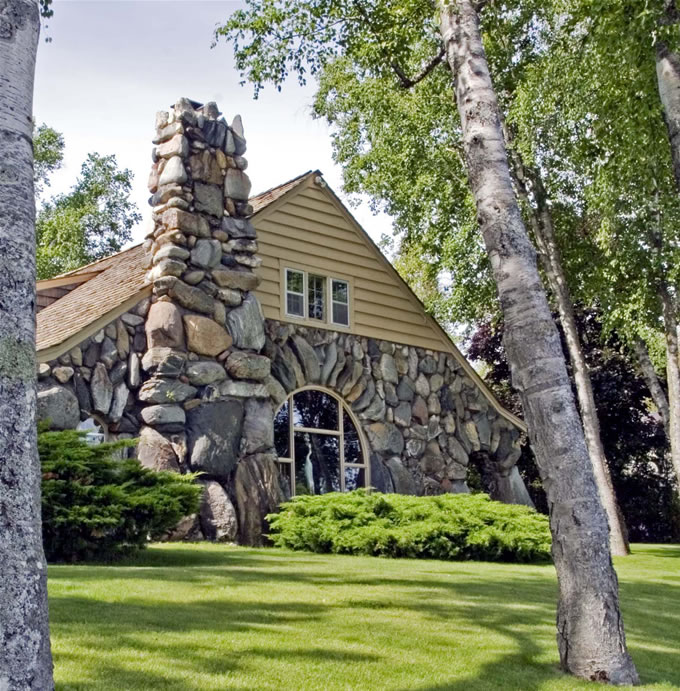
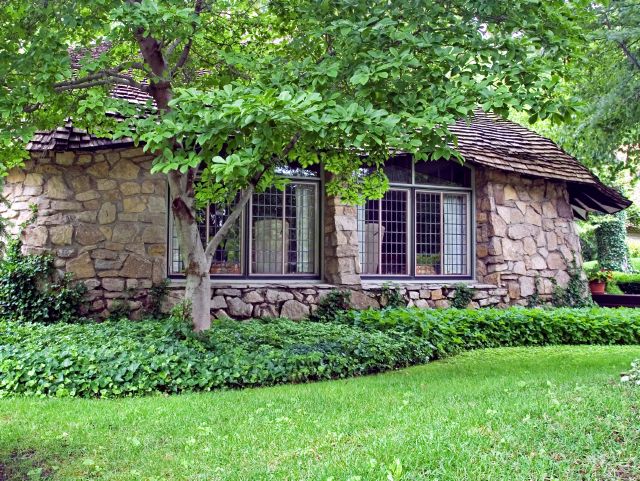
Boulder Manor is one of the most astonishing homes in northern Michigan. (Photo courtesy of Mike Barton
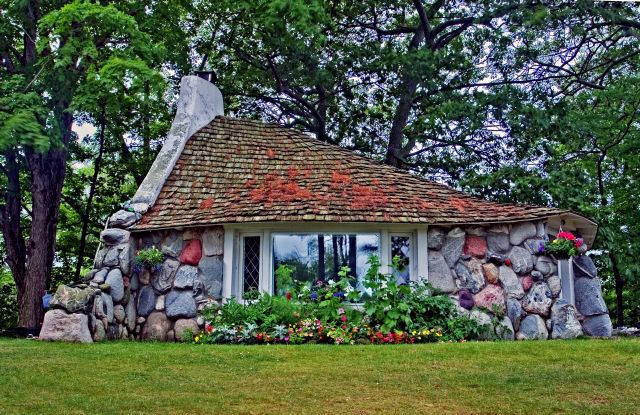
The “Half House" is the smallest of Earl Young's houses and is considered by many to be the quintessence of his style. (Photo courtesy of Mike Barton)
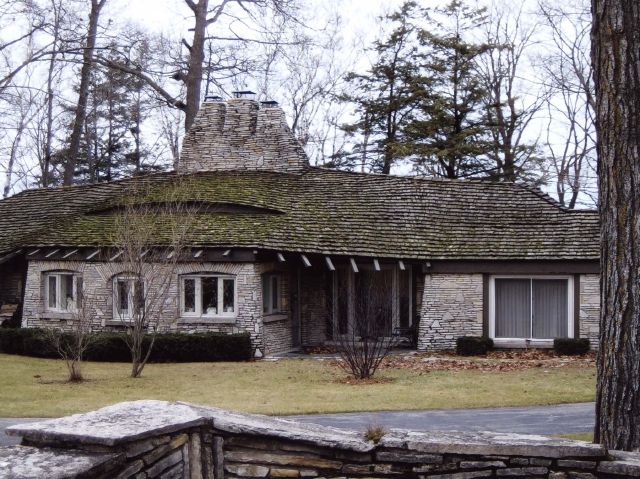
Situated along the shore of Lake Michigan, this home was built in the late 1940s for William Sucher, head of the Speedway 79 Gasoline Company.
The official “Mushroom House” at the corner of Grant Street and Clinton Street is considered to be Earl Young’s residential masterpiece. (Photo courtesy of Mike Barton)